
Used rally and race shells, roll cages, safety fuel tanks, sump guards, bumpers, doors, bonnets, windows and other body parts.
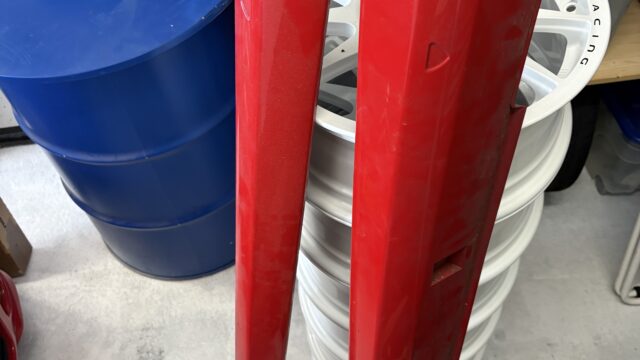
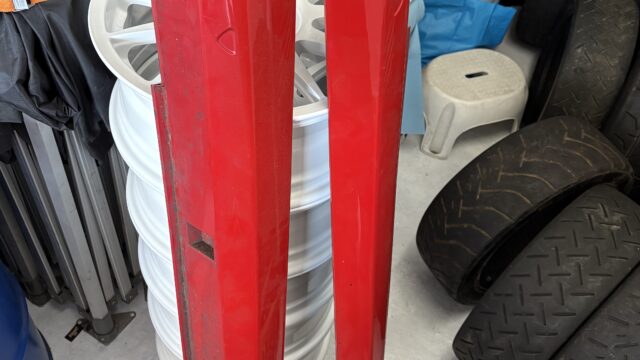
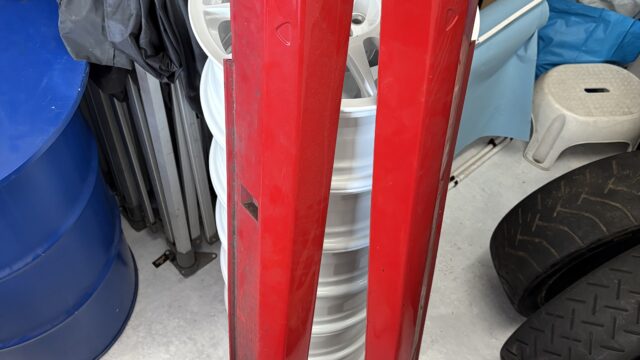
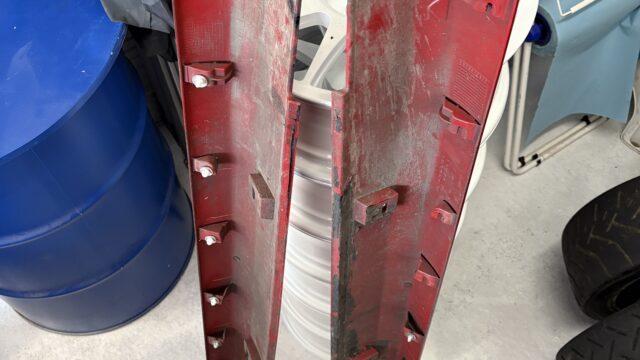
Citroen C2 VTS side skirts
- LEIDEN, Netherlands
- November 4, 2026
Why the shell matters
The shell, roll cage and fuel cell keep the crew safe, and they also decide whether a car passes scrutineering. Check the paperwork and the condition of these parts before anything else.
Roll cage paperwork
Roll cages fall into two groups. A cage homologated or certified by a national sporting authority carries an identification plate that must match the approved copy. A cage homologated by the FIA comes with a numbered certificate from the car manufacturer, and FIA cage homologation is mandatory for some top-level variants.
When you buy a caged shell, ask for the certificate, or the plate and approval copy, and check that the cage in the car still matches the paperwork.
Inspecting the cage and shell
Most rally rules require welded mounting feet, so a bolt-in cage is a red flag. Look at the welds, especially in the roof and at the base of the A-pillars, and check the mounting plates, door bar gussets and the condition of the tubes. Fuel lines should run inside the cage.
Uneven gaps, creases and fresh welds or filler around suspension points are signs of a past crash. Ask about repairs, who did them and whether the shell was repaired on a jig.
Safety fuel tanks
Safety fuel tanks have a hard expiry date. FIA Appendix J accepts FT3-1999, FT3.5-1999 and FT5-1999 bladders, and no bladder may be used more than five years after manufacture. The manufacturer can inspect and recertify a bladder for up to two more years. Read the label before you buy a used fuel cell or a car that has one.
Seat mountings and panels
The shell also carries the seat mountings. FIA rules call for at least four mounting points per seat, with bolts of at least 8 mm and a contact area of at least 40 cm2 per point. Check these on a shell that is already prepared.
For body panels, check whether lightweight or composite parts are allowed in your class, and whether parts are original homologated items or copies.
Frequently asked questions
How long is an FT3 fuel cell valid?
Under FIA Appendix J Article 253, a safety tank bladder may not be used more than five years after its manufacture date. The manufacturer can inspect and recertify it for up to two more years.
What paperwork should come with a roll cage?
An FIA-homologated cage comes with a numbered certificate from the car manufacturer. A cage certified by a national authority has an identification plate that must match the approved copy held by the owner.
Is a bolt-in cage acceptable?
Most rally rules require welded mounting feet, so a bolt-in cage is usually a reason to look closer or walk away. Check the rules of your championship.
How can I spot a crashed shell?
Look for creased floor and roof panels, uneven gaps, and fresh welds or filler around suspension points and cage feet. Ask for evidence of jig repairs and for the seller's account of past incidents.