
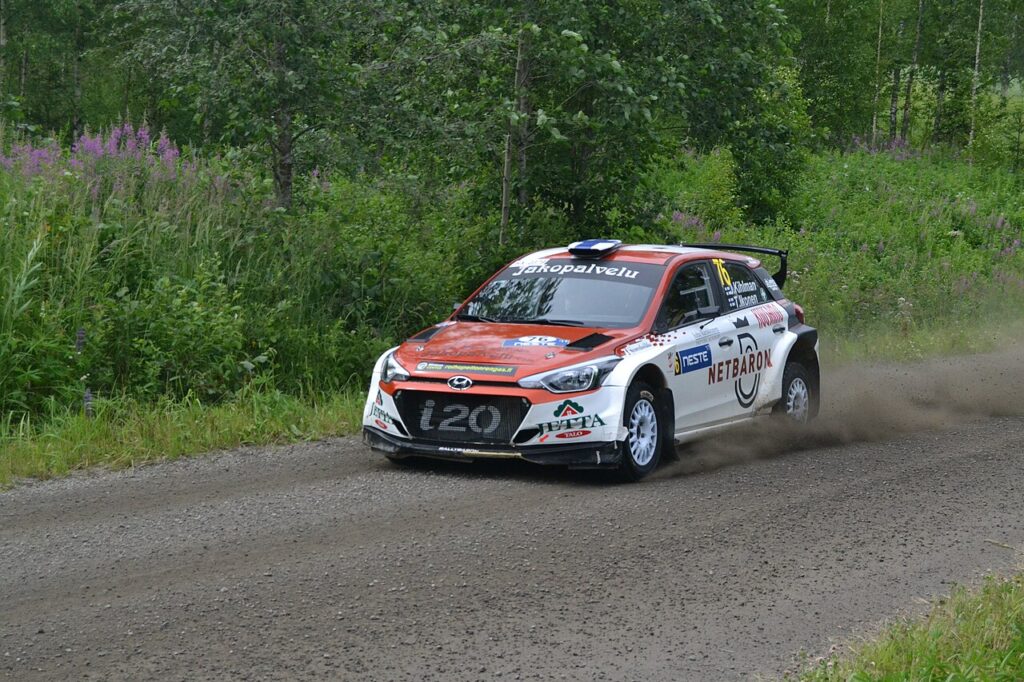
 Photo: Antti Leppänen, CC BY 4.0, Wikimedia Commons
The i20 R5 was the first car designed, developed and supplied by Hyundai Motorsport’s Customer Racing department. It is a four-wheel-drive R5 car with a 1.6 litre turbo engine on a 32 mm restrictor, a five-speed sequential gearbox and the 1,230 kg R5 minimum weight. It debuted in WRC2 at the 2016 Tour de Corse and was succeeded by the i20 N Rally2 in 2021.
| Class | R5 (FIA R5 homologation; R5 cars run in the Rally2 class since the FIA renamed the category in 2019 to 2020, check national rules for current eligibility) |
|---|---|
| Built by | Hyundai Motorsport GmbH Customer Racing, Alzenau, Germany |
| Years | 2016 to 2021 (replaced by the i20 N Rally2 from 2021) |
| Drive | 4WD |
| Gearbox | Ricardo five-speed sequential |
| Weight | 1230 kg |
History
Hyundai’s customer racing division began testing the i20 R5 in January 2016 and ran about nine months of testing across Europe before customer deliveries.
The car made its competition debut in WRC2 at the 2016 Tour de Corse, driven by Kevin Abbring and Sebastian Marshall. A private driver won an international rally with it on only its second event, and it took its first WRC2 win at Wales Rally GB 2016.
Under the R5 joker system Hyundai introduced upgrades in the car’s first two competition years. The final joker package was homologated on 1 March 2018 and brought a new engine map, variable valve timing, a reworked anti-lag strategy, new tarmac and gravel damper specifications and a wider range of differential ramps; existing customers could fit the changes from the same date.
The car won three titles in its first full season and was sold to customers in, among others, Portugal, Ireland and Paraguay. In 2020 Jari Huttunen and Mikko Lukka won the WRC3 title with an i20 R5.
From 2021 the i20 R5 was replaced by the i20 N Rally2, based on the new-generation i20 N road car. The i20 R5 remains common in national championships.
Technical specifications
| Engine | Hyundai 1.6 T-GDI four-cylinder, 16 valves, direct injection, Magneti Marelli injection |
|---|---|
| Displacement | 1600 cc |
| Induction | turbo |
| Turbo restrictor | 32 mm |
| Gearbox | Ricardo five-speed sequential |
| Drive | 4WD |
| Differential | Ricardo mechanical limited-slip differentials front and rear; no centre differential control |
| Suspension | MacPherson struts front and rear, three-way adjustable dampers |
| Brakes (tarmac) | 355 mm ventilated discs, Brembo four-piston calipers |
| Brakes (gravel) | 300 mm discs, four-piston calipers |
| Weight | 1230 kg |
| Length | 4035 mm |
| Width | 1820 mm |
| Wheels | 18 inch tarmac, 15 inch gravel |
| Other details | Power about 275 to 290 hp and torque about 420 to 440 Nm depending on evolution; the 2020 car produces 290 bhp at 5,000 rpm and 440 Nm at 4,000 rpm. Wheelbase 2,570 mm. Runs on 102 octane competition fuel. |
Photos
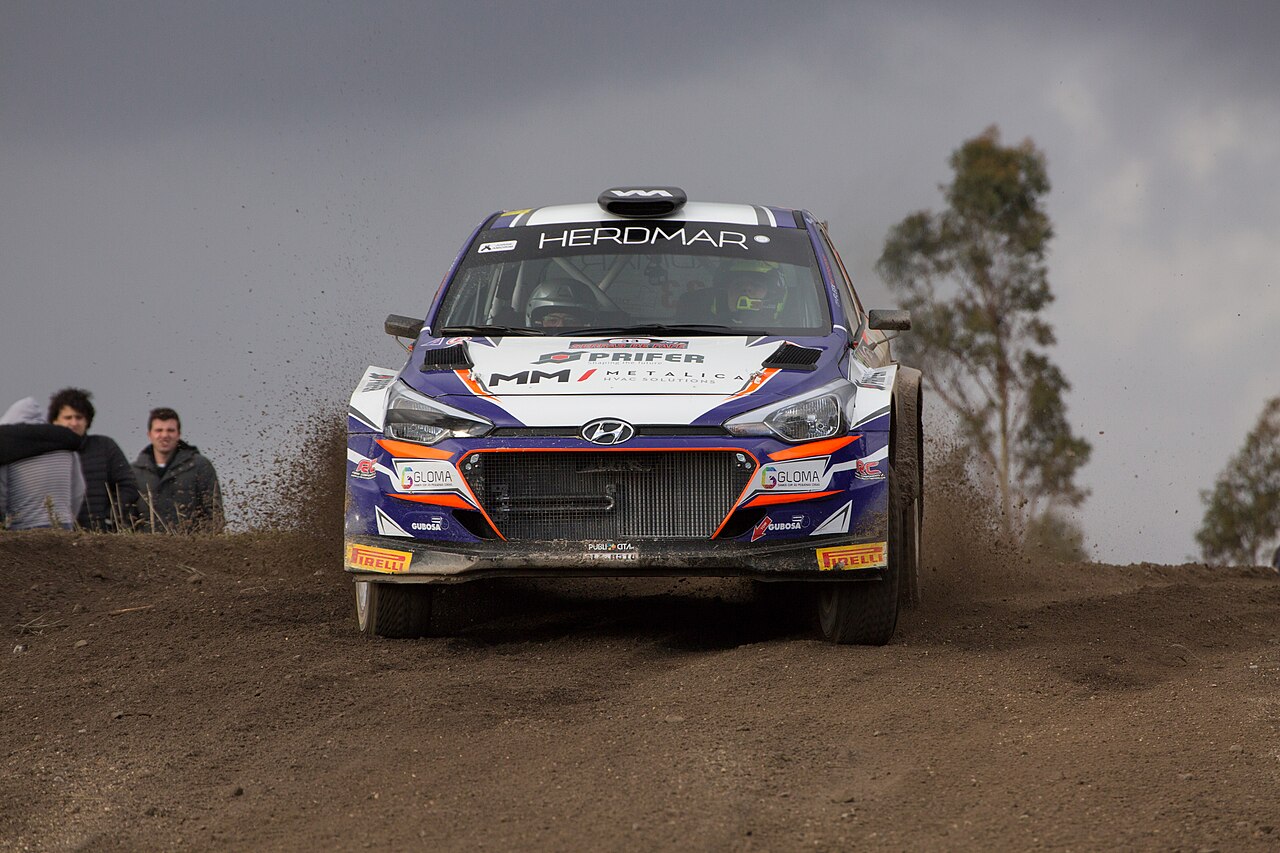 Front
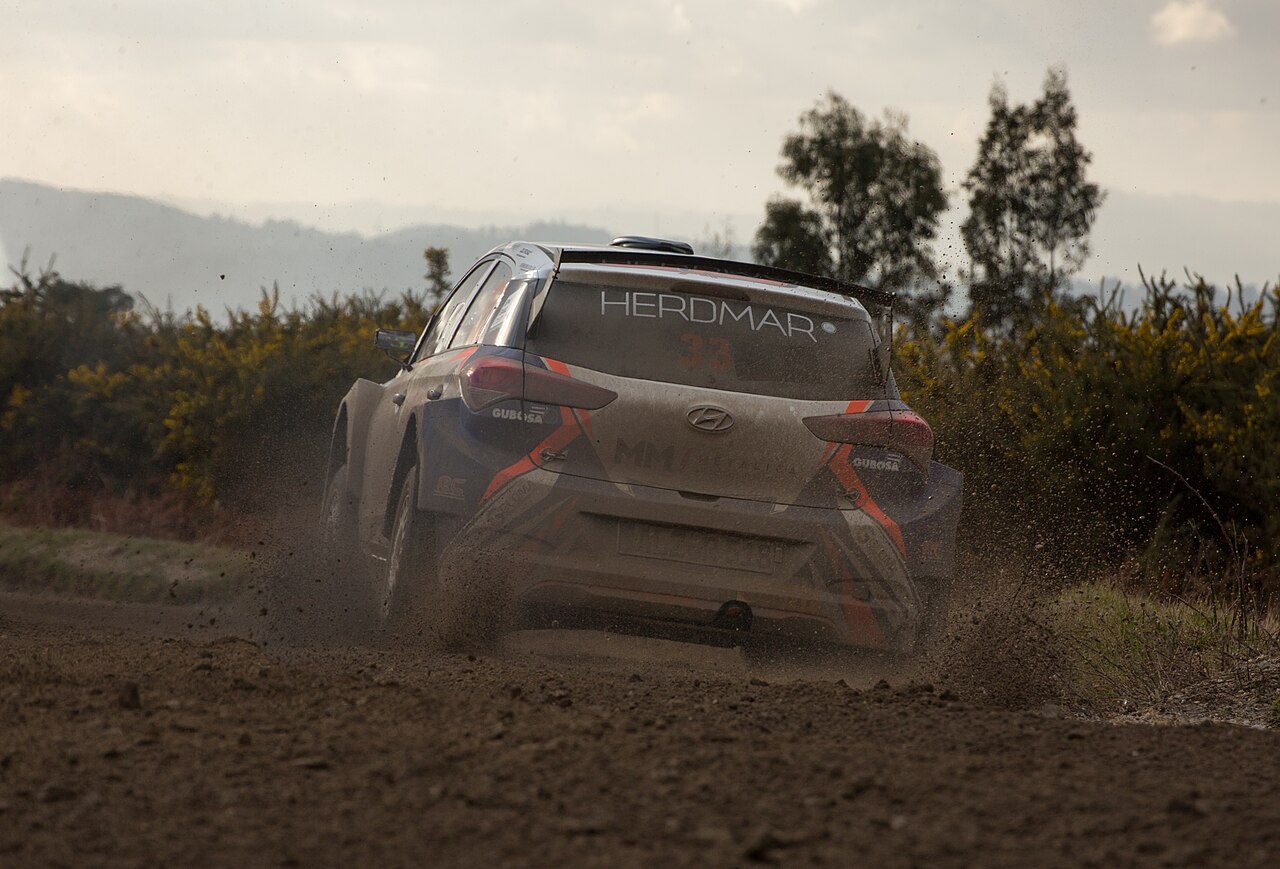 Rear
Photos: front Harpagornis (CC BY-SA 4.0), rear Harpagornis (CC BY-SA 4.0), via Wikimedia Commons
Homologation
Final joker evolution homologated on 1 March 2018.
Championships and results
| Year | Championship | Driver | Result |
|---|---|---|---|
| 2016 | WRC2 | First WRC2 win at Wales Rally GB | |
| 2020 | WRC3 | Jari Huttunen / Mikko Lukka | champion |
Parts and buying advice
Parts that change hands most
- Ricardo sequential gearbox and differentials
- three-way adjustable dampers (tarmac and gravel specs)
- 355 mm tarmac and 300 mm gravel brake kits
- 18 inch tarmac and 15 inch gravel wheels
What to check when you buy
- Which joker evolution the car carries (2018 engine and damper package)
- FIA homologation papers and roll cage certification
- Hours or km since engine and gearbox rebuild
- Seat and harness expiry dates
Known suppliers
- Ricardo (gearbox, differentials)
- Brembo (calipers)
Looking for parts for this car, or selling them?